

Western Azerbaijan
Sardarabad Fortress
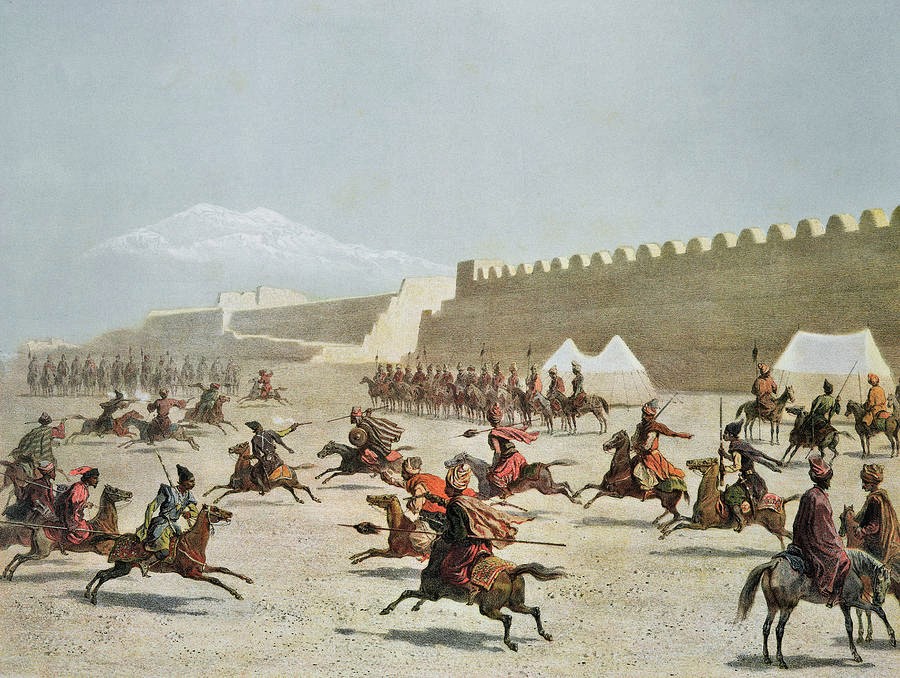
The Sardarabad Fortress was located in the Sardarabad district of the Iravan Khanate. It was named in honor of the Iravan sardar, who commissioned its construction. Situated near the Turkish border on the left bank of the Araz River, this fortress was considered the southern gateway to the city of Iravan.
Aware that Russia had not abandoned its intentions to seize the Iravan Khanate, Huseyngulu Khan, in addition to reinforcing the Iravan Fortress, commissioned the construction of a grand military fortification complex between 1815 and 1817 with the participation of French engineers.
The Sardarabad Fortress, enclosed by double walls, had a rectangular shape with four gates. Cannons were positioned on its bastions. A canal was drawn from the Araz River to supply the fortress. Surrounded by vast gardens, the Sardarabad Fortress housed the palace of the Iravan Khan, as well as storage facilities for provisions and military supplies.
Before launching an assault on the Iravan Fortress, Russian commander Ivan Paskevich aimed to capture the Sardarabad Fortress and seize the food supplies stored there. On September 13, 1827, Russian troops attacked the Sardarabad Fortress from two directions. The garrison consisted of 2,000 fighters and 14 cannons. On the night of September 15, Hasan Khan, the brother of the Iravan Khan, secretly entered the fortress with his detachment and assumed command of its defense. However, once Russian artillery destroyed the southern walls of the fortress, its defense became untenable. During the night of September 20, after Hasan Khan and his detachment withdrew, the Sardarabad Fortress fell. The Russians captured six months’ worth of provisions, 13 cannons, and a significant amount of gunpowder and ammunition from the fortress.
According to Armenian historian V. Parsamyan, after Hasan Khan abandoned the fortress, Armenians opened its gates to the Russian troops.
Following the occupation, Armenian families settled in the fortress. Over time, the structure gradually fell into ruin, as Armenians dismantled the fortress walls and used the stones to build their own houses. Today, only traces of the fortress ruins remain.