
Western Azerbaijan
Siniq Caravanserai
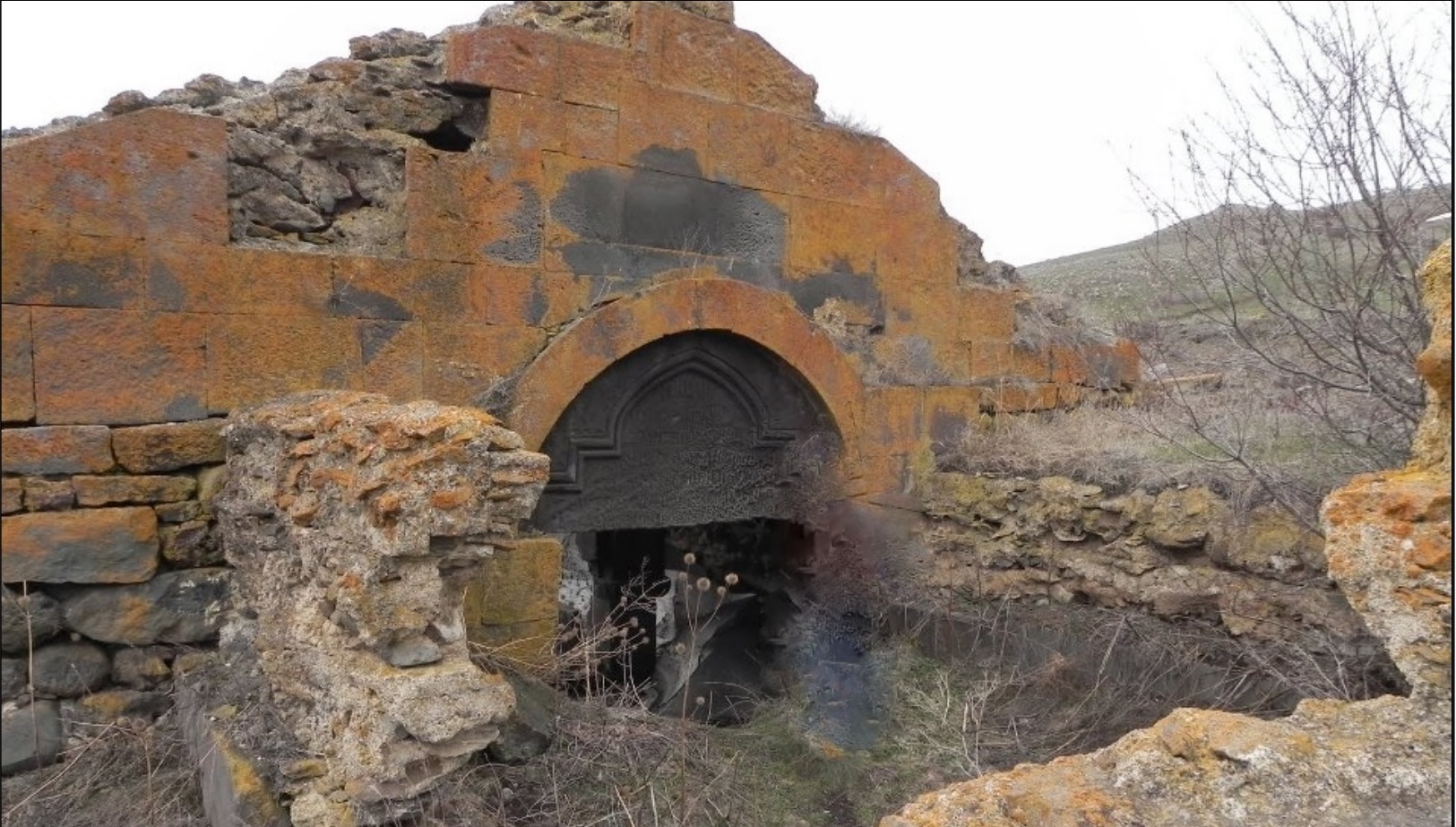
Siniq Caravanserai is a Turkic-Muslim historic monument near the village of Yayji in the Gorus district of Zangazur, situated along the ancient Urud road. Similar caravanserais in the region, such as Selim and Aghkand in the Daralayaz district, also belong to this period. Siniq Caravanserai was built along the ancient Silk Road during the reign of Abu Said Bahadur Khan, the ruler of the Azerbaijani Ilkhanate state. Because of this, it is sometimes called the Abu Said Caravanserai.
An inscription in Persian written in Arabic script, showing the Hijri date of 698, is carved on a large stone above the entrance, confirming its construction in the Gregorian year 1319. Researchers believe the name "Siniq" (meaning "broken") comes from its distinctive “Г”-shaped design. The walls are built from rough river stones bonded with a lime and sand mortar. The arches and columns are made from finely-cut basalt. Remnants of an ancient cemetery surround the caravanserai.
The area around the caravanserai, and Zangazur overall, has historically been home to the Turkic-Oghuz peoples. The first large influx of Armenians into the area started in the early 19th century after it was occupied by the Russian Empire.
On July 3, 1968, the village was renamed "Karjis" by decree of the Presidium of the Supreme Soviet of the Armenian SSR.
According to the law "On the administrative-territorial division of the Republic of Armenia," dated November 7, 1995, the village of Yayji was included in the administrative territory of the Syunik region.